Showing posts with label PPF. Show all posts

Monday, April 18, 2016

Actors of the Pacific Playwrights Festival: Being Part of Something Amazing

Pacific Playwrights Festival participants meet-n-greet in 2015.
Hundreds of actors have helped new works come to life at the Pacific Playwrights Festival (PPF) for the past 19 years. Each loves getting a phone call from Joanne DeNaut, SCR’s casting director, because the festival is where s/he can “work on exciting text, with an incredible artistic team, in one of the very best theatres in the country.” We caught up with four PPF veteran actors and talked about their love for the festival.


Matthew Arkin
2016 PPF: A Perfect Circle by Noah Haidle (reading)
Past PPF: Our Mother's Brief Affair by Richard Greenberg (production); The Prince of Atlantis by Steven Druckman (reading and production); Hope and Gravity by Michael Hollinger (reading); The Whistleblower by Itamar Moses (reading)

Best experience: Working on a new play at an initial reading is one of my favorite parts of being an actor. There is little that is as rewarding as being in on the development of a new piece, working cheek-by-jowl with the playwright and a director as you test and probe the plot, the characters, and their motivations. It really becomes about the text, mining what works, finding out what doesn't, and watching a new work go through its birth pangs as it transforms, ultimately, one hopes, into something that really speaks to an audience.

Favorite festival memory: Working with my brother Adam on the PPF reading of The Prince of Atlantis. Getting to play brother to my brother was so easy and natural, and we know each other so well that I felt it brought a depth to the relationship and the humor that's pretty rare to experience.

Best part of PPF: There's nothing better than grown-up actor camp, getting to spend a week working, socializing and catching up with so many incredible talents from our industry and getting the chance to see their work and learn from them all.


Emily Bergl
2016 PPF: Wink by Jen Silverman (reading)
Past PPF: The Hiding Place by Jeff Whitty (workshop); Ridiculous Fraud by Beth Henley (reading); Emilie: La Marquise Du Châtelet Defends Her Life Tonight by Lauren Gunderson (reading); Kin by Bathsheba Doran (reading)

Favorite memory: My favorite memory of PPF is from when I was doing a reading of Jeff Whitty's The Hiding Place and was in the middle of a very plaintive, quiet monologue. During a pause an old lady in the audience exclaimed, "She has a great nose!" I couldn't really be offended.


The festival’s special quality: I know this word is overused, but PPF is a wonderful reminder that we are part of a community. It's easy to get bogged down with the day-to-day trials and tribulations in the business, but when you walk across that plaza at PPF and bump into so many people that you respect and actually know, you can't help but feel grateful.


Corey Brill
2016 PPF: Office Hour by Julia Cho (production)
Past PPF: Smokefall by Noah Haidle (production); Five Mile Lake by Rachel Bonds (production); Of Good Stock by Melissa Ross (production)

Inaugurating a role: I've been so lucky to be a part of—so far!—four consecutive PPFs! The festival has allowed me to play a reluctant fetus, a doctoral student in crises, a reluctant fiancé and now a concerned adjunct professor. One of the coolest opportunities for an actor is to work on an original script with the playwright's input, to be a part of the development of a play from the start is kind of an actor's dream. (Plus, nobody can say that they've seen the role portrayed better!)

Favorite festival memory: During the run of Smokefall by Noah Haidle, an important scene transition had a problem: a staircase that was supposed to retract refused to budge and there was no way to continue with the scene. After an apologetic announcement from the stage manager's booth, the great Orson Bean (who played The Colonel in the play) said "I've got this!" and came onstage from the wings. He entertained everyone with about 10 minutes of his classic vaudeville jokes until the problem had been solved! It was so cool to see a master in his element like that!

Importance of the festival: Every play on Broadway or the West End or at the local community theatre was shared with an audience for the first time once. I always think of the audience as the final character and the very first performance as the moment that a "script" becomes a "play." PPF has given me opportunities to be a part of that really special metamorphosis. Each play is unique, but at SCR I've found these things to be constant: you work on exciting text with an incredible artistic team in one of the very best theatres in the country. I'll always be proud to have been involved.


Linda Gehringer
2016 PPF: A Perfect Circle by Noah Haidle
Past PPF: The Mechanics by Chris Van Groningen (reading); The Butterfly Collection by Theresa Rebeck (reading); Getting Frankie Married—and Afterwards by Horton Foote (production); Lobster Face by Magdalena Gomez (reading); The Intelligent Design of Jenny Chow by Rolin Jones (production); A Naked Girl on the Appian Way by Richard Greenberg (production); The Piano Teacher by Julia Cho (reading); Emilie: La Marquise Du Châtelet Defends Her Life Tonight by Lauren Gunderson (reading); The Language Archive by Julia Cho (production); Kin by Bathsheba Doran (reading); The Few by Samuel D. Hunter (reading); The Parisian Woman by Beau Willimon (production); Future Thinking by Eliza Clark (reading)

The festival community: Working on new plays is always exciting but doing it in an atmosphere where there are artists from all over the country who are doing the same thing and then performing the play for the first time in front of an audience of artists and patrons who feel so deeply about new play development is simply thrilling.

Favorite festival moment: One of my favorite PPF stories is when I read Julia Cho's The Piano Teacher. So much of the dialogue was mine it was the first time I realized the fate of this play could be in my hands and I was terrified! I was shaking and couldn't even think straight before I walked on stage, but the warm, wise and welcoming audience just rode the wave of Julia’s beautiful play and they all stood and applauded at the end of that reading on a very early Sunday morning. I just started crying because my sense of relief was so profound. It also was the beginning of an addiction to feeling that passionate about new work.

Best memory: The very first Pacific Playwrights Festival took place in the beginning stages of my relationship with SCR and I was invited to read a play called The Mechanics that Andrew Robinson directed. I remember there were all these tables set up and we were having drinks after some reading or function…..and there were people I knew from around the country and people I was meeting for the first time and, honestly, I felt like I was with the cool kids……and I still do! I keep my fingers crossed every year that Joanne DeNaut, our casting director, will call.


Rob Nagle
2016 PPF: A Perfect Circle by Noah Haidle
Past PPF: Rest by Samuel D. Hunter; Of Good Stock by Melissa Ross; The Whistleblower by Itamar Moses

Importance of working on a new play: There is nothing like being in the rehearsal room with a writer as the story is being made, or perhaps "found" is a better word. The sense of exploration, discovery, play and collaboration is tremendously exciting—and it doesn't matter if we're crossing out lines or being handed new pages; it always feels like I'm part of something vital and bigger than me.

Favorite roles: Well, in the last two PPFs, I was fortunate enough to be performing in the shows running on the Segerstrom Stage. In 2014, it was Samuel D. Hunter's Rest and in 2015, it was Melissa Ross' Of Good Stock. So last year, it was a real treat when I got to be part of the reading of Itamar Moses' The Whistleblower.

Taking part in PPF means: That I'm on the frontlines of some of the most exciting theatre being created in this country. To have this treasure in our Southern California backyard is profound, and I am so very grateful for it.


Learn more about the 2016 Pacific Playwrights Festival and purchase tickets.

Pacific Playwrights Festival 2016: New Play Starter Kit


South Coast Repertory’s annual Pacific Playwrights Festival (PPF) is a major national showcase for new plays and it's this weekend—April 22-24. The three-day festival attracts theatre professionals and new play lovers from across the nation, who are drawn by the chance to be the first to see some of the best new plays in the country. Here is our PPF New Play Starter Kit—your guide to getting the most out of your PPF weekend.

Get PPF Updates and Join the Conversation

Follow SCR on Twitter at @SouthCoastRep for updates throughout the weekend.

Connect with us and other PPF attendees, tweet with us using #PPF2016.

Go Behind-The-Scenes of PPF

Follow us on Instagram at @SouthCoastRep for behind-the-scenes photos of the festival.

Follow our PPF story on Snapchat at @SouthCoastRep. Get a look at the PPF weekend through the eyes of SCR Communications Associate Nicholas Pilapil.

New Play Development at SCR


SCR has presented 500 plays over its more than five-decade history. And the number continues to climb as we watch plays developed here go on to other productions across the country. But what kind of process does a new play go through to reach that stage? Check out the banners in the lobby that show a new play’s journey.


The South Coast Repertory Podcast


Why New Plays Matter

Interview with Office Hour Playwright Julia Cho


PPF Playwrights Panel: The Wright Stuff
Sunday, April 24, at 9 a.m., South Coast Repertory presents The Wright Stuff, a colloquy which personalizes the playwriting process, with the writers of the 2016 Pacific Playwrights Festival, including Rachel Bonds, Julia Cho, Eliza Clark, Noah Haidle, Meg Miroshnik, Kemp Powers and Jen Silverman. Admission is free or you can live stream the panel via HowlRound.

Liz Engelman will moderate the conversation. Liz is a freelance dramaturg, faculty member at the University of Texas at Austin and director of Tofte Lake Center at Norm’s Fish Camp, a multidisciplinary artists retreat in northern Minnesota.

Topics may include:
  • Germinating ideas for the plays featured in the festival
  • Writing routines and regimens
  • Approaches to rewriting
  • Choosing and working with collaborators

Experience a PPF Play!
There's no better way to experience PPF than by seeing a new play.


A Perfect Circle
by ​Noah Haidle
directed by ​Evan Cabnet
dramaturg​, Kimberly Colburn
Friday, April 22, at 1 p.m., on the Segerstrom Stage
Jackie is trying desperately to deliver on a long-deferred promise of building a garden for his wife. She’s dying, their son is coming home after a lengthy absence, the weeds in the backyard won’t stop growing, and that haunted train whistle keeps getting closer. Heartbreak with a twist of Haidle.

Little Black Shadows
by ​Kemp Powers
directed by ​​May Adrales
dramaturg​, Andy Knight
Friday, April ​22, at 3:30 p.m., on the Segerstrom Stage
Toy and Colis are children; so are the masters they silently serve on a Georgia cotton plantation. Only at night do the young slaves come alive, to tell stories and dream by the light of fireflies. But their world is about to change forever. Do they dare to come out of the shadows?

Curve of Departure
by ​Rachel Bonds
directed by​ ​Mike Donahue
dramaturg​, John Glore
Saturday, April 2​3, at 10:30 a.m., on the Segerstrom Stage
On a balmy New Mexico night in a too-small motel room, a “ragtag little group of humans” gathers in anticipation of the funeral that has brought them together. But the dearly departed is the least of their concerns as they all grapple with the curves life has thrown them.

Lady Tattoo
by ​Meg Miroshnik
directed by ​Marti Lyons
dramatug​, Joy Meads
Sunday, April 24, at 10:30 a.m., on the Segerstrom Stage
At the beginning of the 20th century, tattooed lady Picky is commissioned by Lady Elizabeth Arterton to do some custom inking. It quickly becomes more than a transaction as desperation, regret and art collide in a world where a woman’s options are corseted.

Wink
by ​Jen Silverman
directed by ​​Bart DeLorenzo
dramaturg​, Jerry Patch
Friday, April 2​2, at 8 p.m.; Saturday, April 2​3, at 2:30 p.m. and 8 p.m.; Sunday, April 24, at 2:30 p.m., ​in the Nicholas Studio
Sofie is distraught over the disappearance of her beloved cat Wink. Her husband Gregor knows what happened, but he’s not talking​—except to Dr. Frans, the oddball shrink he shares with Sofie. But some things won’t stay buried, and when Wink turns up unexpectedly with plans for revenge, things get really wild. Repression is a bitch.

Buy Tickets

Monday, April 11, 2016

Casting Director Joanne DeNaut


Joanne DeNaut with actor Daniel Blinkoff at the Pacific Playwrights Festival.
On Casting Director Joanne DeNaut’s desk sits a crystal obelisk—the Casting Society of America’s Artios Award for Excellence in Casting—one of many honors she has received through the years. Outside her office door hangs an equally meaningful piece: a framed photograph from South Coast Repertory’s 1978 production of Henrik Ibsen’s A Doll’s House, a reminder of the moment that she was introduced to theatre in Costa Mesa.

Brooklyn-born DeNaut was an urban planning major at the University of California, Irvine, when she took a class on Women in Literature and went to see the Ibsen production at a small theatre company—SCR—on Newport Boulevard. David Emmes directed and the production values “totally surprised me. I thought ‘This is a good as New York!’” She became an SCR convert.

But life got in the way: she continued her studies at UCI, worked at a waterfront restaurant, had a 7-year-old and had no time to attend theatre. But SCR stayed on her mind. With a social ecology degree in hand and a job lined up, she realized that maybe she didn’t want to work in the city government. She wanted to do something more creative.

A newspaper ad for an SCR job caught her eye and she jumped at the chance to be an executive assistant to Founding Artistic Directors David Emmes and Martin Benson. Like many others at theatre, she grew her skills by wearing many different hats, what she describes as being “like getting my theatre master’s degree.” She worked closely with Lee Shallat, then a stage director, Conservatory director and casting director, who became somewhat of a mentor.

“She told me that casting is not something you learn, but rather a more innate ability to assess talent,” DeNaut says. "That was my entrance into the start of my career in casting." Being a casting director didn’t just “happen” for her. “It took me many years to develop my skills in the art of collaboration when working with artists and I’m still learning.”

Jenny O'Hara, Arye Gross and Marin Hinkle in Richard Greenberg's Our Mother's Brief Affair in 2008.

Mark Harelik and Paul David Story in the 2016 production of Red by John Logan.

Gregory Sims and Nancy Bell in the 2012 revival of Sight Unseen by Donald Margulies.

The cast of Cyrano de Bergerac in 2004.

DeNaut and Mark Rucker.
What does a casting director do?
There’s a misconception that a casting director chooses the actors for a play, TV or film. That doesn’t happen; I don’t choose who’s on that stage; in my role, I choose the pool of actors from which the director, playwright and artistic director will cast actors through auditions. It’s a collaboration, but ultimately the final choice is in the director’s hands.

I read the play to get a sense of the roles and then have the director tell me how he/she sees the characters. If it’s a new play, the playwright is involved in that process as well. Once I receive his/her notes, I make lists and send them off.

We do many readings each season at SCR, which is a different casting process because we do not have auditions and often there is not a director. After discussion with either the writer or director, I will I send ideas. The writer and director often are not familiar with the pool of actors in the Los Angeles area, so they rely heavily on the information I provide to them. Casting for readings is important since the playwright relies on these actors to tell their story.

What happens in an audition?
We use the description of the characters, called the ‘breakdown’, to choose the actors who come in to audition. Actors will have the script and the scenes ahead of time for what they will be reading. The director and casting team will be in the room and, if it’s a new play, the playwright will be there as well. We provide a reader for the audition, someone who will read all the other parts. Readers are important because they provide assistance to the actors in their scene, while being careful not to steal focus. Depending upon the number of roles left to cast, we will have a 4-6 hour session and then have a day of callbacks after narrowing the choices.

What are the challenges and delights in your job?
Currently, I’m focused on the Pacific Playwrights Festival and this always is an interesting time. This year, there are 25 roles and several of those are particularly challenging. Watching these plays come alive in the readings with those actors is really one of the most thrilling parts of being a casting director.

What are some personal moments that stand out for you?
Working on all the new plays has been the most rewarding, particularly getting to work with major American playwrights such as Richard Greenberg, Howard Korder, Amy Freed and Donald Margulies. There are countless others as well and many have now gone on to be successful writers in film and television.

This season, working on John Logan’s Red, Mark Harelik already was signed for the role of Mark Rothko. Mark is amazing and a favorite of mine. I had seen Paul David Story in productions at several other theatres and really admired his work. We brought him here to audition several times and he always was a contender, but not cast. It was so rewarding to have him earn the role of Ken and be so wonderful in it. The relationship between Rothko and Ken was factor in the success of that show.

The late Mark Rucker was a favorite director for me to work with—well, he was everybody’s favorite: backstage crew, designers, actors...everyone. He smart, a true visionary, a great collaborator and the kindest soul. His production of Cyrano de Bergerac was one of the highlights for me. It was a huge undertaking, with a giant cast, and he rose to the challenge by making everyone want to contribute to its success. It was wonderful.

Experience the result of DeNaut’s work in both staged readings and full productions during the 2016 Pacific Playwrights Festival. Learn more.

Thursday, August 13, 2015

CrossRoads: Igniting Inspiration

Linda Vo, Julia Lee, CrossRoads playwright Lauren Yee, Literary Director Kimberly Colburn, Assistant Literary Director Andrew Knight at the OC & SEAA Center, UCI.
With nearly 1,000 square miles and more than 3 million strong, Orange County, Calif. is a unique area with a rich resource of cultures and stories ripe for the telling. It's a place that trumps numerous stereotypes perpetuated by shows like “The Real Housewives of Orange County.” As demographics shift and grow, so do the faces of the people who represent the county. Orange County is a place of multiple intersecting cultures and groups—with each one calling out to be heard.
Playwright Mona Mansour (center) during her August 2013 residency.
Thanks to a generous grant from the Time Warner Foundation, South Coast Repertory is answering that call with the CrossRoads initiative. The program commissions playwrights from all over the nation, but unlike a typical SCR commission, their process begins with the playwright undertaking a residency to explore the county’s diversity.

Playwrights first spend 10 days in Orange County, fully immersing themselves in the county's rich cultural, social and political life. Through their explorations, they discover diverse stories and personal connections, meeting with community organizations and individuals from all walks of life. They will then write plays either directly or indirectly informed by their residency experiences and follow their own artistic impulses.

When CrossRoads launched in 2013, SCR selected a playwright class of emerging and established names, including Luis Alfaro, Marc Bamuthi Joseph, Carla Ching, Aditi Brennan Kapil, Qui Nguyen, Mona Mansour and Tanya Saracho.

In the spring of 2015, four playwrights’ works were workshopped and further developed at SCR and portions from those plays were presented to the public as staged readings. Since then, many of the plays realized through the initiative have gone on to additional staged readings, further development and are scheduled for upcoming productions at SCR and around the country.

Playwright Qui Nguyen (left) with the PPF 2015 cast of Vietgone.
Among the first group offerings were Nguyen’s Vietgone and Kapil’s Orange, which were presented at SCR’s 2015 Pacific Playwrights Festival. Vietgone also will open the 2015-16 Julianne Argyros season. Following the premiere, it will be produced at the Oregon Shakespeare Festival in 2016.

In July 2015, Ching’s Nomad Hotel received development as a part of the prestigious National Playwrights Conference at the Eugene O’Neill Theater Center. Mansour’s unseen continued development at New York Stage and Film in April 2015 and during a Studio Retreat at the Lark Play Development Center in June 2015. unseen was also featured on The Kilroys’ The List 2015—a list of the top un- and under-produced plays by female playwrights.

CrossRoads will continue to tap into Orange County’s varied stories through a generous renewal of the grant from the Time Warner Foundation. With this renewal, a new class of playwrights will join the fold and experience their own residencies within the area. The second round playwrights include Dipika Guha, Adam Gwon, Octavio Solis and Lauren Yee.

Playwright Octavio Solis with Josephine "Pepa" Chindemi-Dodge during his July 2015 residency.
“These are four writers who all are at different stages of their careers,” says Artistic Director Marc Masterson. “Octavio Solis has been working with SCR since the late 1980s, but will be able to explore the community like he never has before. He and Adam Gwon spent a great deal of time working on Cloudlands at SCR a few years ago, and we’re lucky to have them both back. Adam is going to be breaking the commissioning mold of straight plays by working on a chamber musical, and we’re excited to begin new relationships with Lauren Yee and Dipika Guha.”

CrossRoads is an exciting and personal way for playwrights to approach new works. As they explore the community, they discover unique stories and form connections with individuals. It has lead playwrights to surprising discoveries and lasting connections. It’s also leading SCR to new discoveries.

“It’s having an impact on how we think about our commissioning program and playwright residencies,” says Masterson. “We’re developing an exciting model for the future.”

Learn more about CrossRoads and the playwrights.

Wednesday, May 6, 2015

Pacific Playwrights Festival Attracts SCR's Most Fervent Supporters

The most successful weekend in history of the Pacific Playwrights Festival (PPF) officially began on Thursday, April 23rd with a group shot of all the participants—artists, artisans and staff—to commemorate their weeks of work The next day, Honorary Producers and Friends of SCR joined a throng of theatre professionals who came from across the country to see (as advertised!) “seven plays in three days!”

Among the most enthusiastic were the four couples who helped underwrite the weekend of plays, programs and parties: Yvonne and Damien Jordan, Sue and John Murphy, Tom Rogers and Sally Anderson and Tod and Linda White. They led the applause after each reading and didn’t miss a moment of the fun. But they weren’t alone.

Fervent supporters of PPF over the years were back in force. Among them, Vicki de Reynal, whose specially-made “I love SCR” t-shirt was the favorite fashion statement, second only to another de Reynal t-shirt emblazoned with the Hirschfeld drawing of Founding Artistic Directors David Emmes and Martin Benson—who were also there, in the flesh.

Two former board presidents were spotted with their wives: Tom Sutton (with Marilyn) and Tom Phelps (with Beth), and one current board president with her husband, Sophie and Larry Cripe. Board members (present and past) were everywhere, including Sam Tang, new to the board this season, with his wife Tammy; Olivia Johnson who never fails to miss an SCR-sponsored event; and Laurie Smits Staude who misses very few. Nola Schneer drove in from her home in the desert and Barbara Roberts was joined by her daughter Brooke, visiting from Florida.

Barbara Van Holt (who once acted at SCR) brought her friend Carolyn Weinberger and former SCR Marketing Director Marcia Lazer came down from San Francisco. Other Friends of SCR included Hedda Marosi and her son Marc, Jene Witte and Diane and Chimo Arnold.

And those were only the ones we got pictures of. If you were also at PPF weekend and plan to attend in the future, let us know—and we’ll take your photo next time!


Having trouble viewing the slideshow? Try watching it here.

Friday, April 24, 2015

Pacific Playwrights Festival 2015: New Play Starter Kit


South Coast Repertory’s annual Pacific Playwrights Festival (PPF) is a major national showcase for new plays and it's this weekend—April 24-26. The three-day festival attracts theatre professionals and new play lovers from across the nation, who are drawn by the chance to be the first to see some of the best new plays in the country. Here is our PPF New Play Starter Kit—your guide to getting the most out of your PPF weekend.

Get PPF Updates and Join the Conversation
  • Follow SCR on Twitter at @SouthCoastRep for updates throughout the weekend.
  • Connect with us and other PPF attendees, tweet with us using #PPF15.

Go Behind-The-Scenes of PPF
PPF rehearsal photos
  • Follow us on Instagram at @SouthCoastRep for behind-the-scenes photos of the festival.
  • Follow our PPF story on Snapchat at @SouthCoastRep. Get a look at the PPF weekend through the eyes of SCR Communications Associate Nicholas Pilapil (of "Nicholas in the Nicholas" video fame!).

The SCR New Play Map
SCR has presented 137 world premieres—the number continues to climb. Most of those plays have gone on to other productions across the country. Check out the SCR New Play Map in our lobby to see where some of them have gone.


The South Coast Repertory Podcast

Episode One: Why New Plays Matter


Episode Two: Interview with Mr. Wolf Playwright Rajiv Joseph


PPF Playwrights Panel
Sunday, April 26, at 9 a.m., Julie Marie Myatt, SCR’s Mellon Playwright in Residence, will moderate a conversation with a number of the 2015 festival playwrights, including Richard Alger, Bekah Brunstetter, Aditi Brennan Kapil, Itamar Moses, Qui Nguyen and Melissa Ross.

Join us for a conversation about the playwright and the audience in the Julianne Argyros Stage. Do playwrights think of audiences as they write? Are these playwrights wrestling with a burning personal question—or is there a more global question at hand? Who or what were they thinking of when they wrote these plays? Admission is free or you can live stream the panel via HowlRound.

Experience a PPF Play—and Save!
There's no better way to experience PPF than by seeing a new play. Use code "ppf15" to get $15 tickets to the PPF staged readings.
  • Going to a Place where you Already Are by Bekah Brunstetter
    directed by Marc Masterson
    Friday, April 24, at 1 p.m., on the Segerstrom Stage
    Roberta thinks she’s been to heaven and back. Now what?
  • The Whistleblower by Itamar Moses
    directed by Casey Stangl
    Friday, April 24, at 3:30 p.m., on the Segerstrom Stage
    Eli tries to rewrite the life he left behind—but the truth could ruin everything.
  • Orange: an illustrated play by Aditi Brennan Kapil
    directed by Jessica Kubzansky
    Saturday, April 25, at 10:30 a.m., on the Segerstrom Stage
    The fantastic Orange County adventures of an exceptional girl named Leela—as illustrated by herself.
  • Vietgone by Qui Nguyen
    directed by May Adrales
    Sunday, April 26, at 10:30 a.m., on the Segerstrom Stage
    Qui Nguyen’s personal epic Vietnamese-American hip-hop road-trip buddy-movie rom-com!
Buy tickets

Wednesday, April 8, 2015

How It All Comes Together


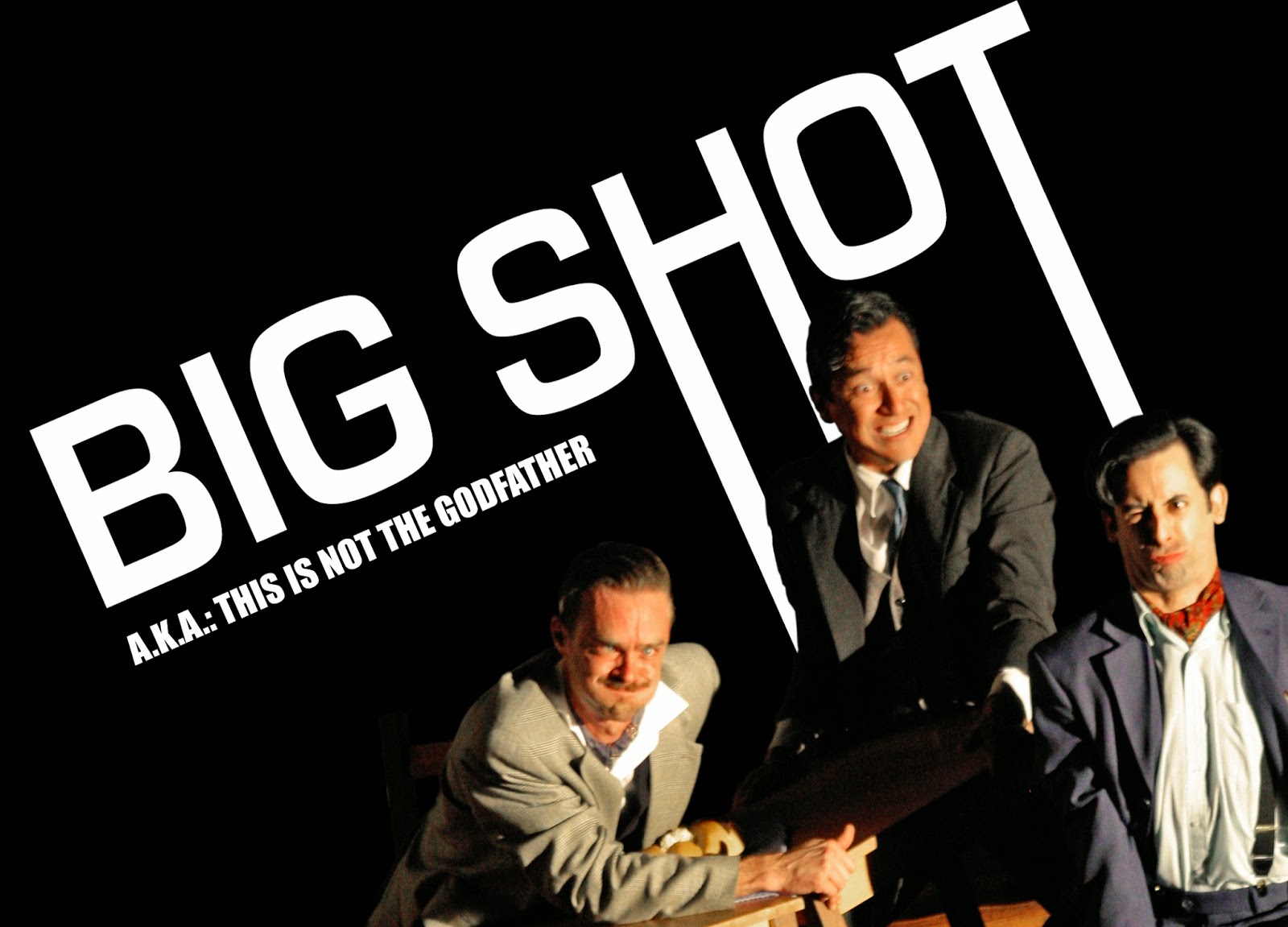
The third time’s a charm for Theatre Movement Bazaar (TMB) as they return to South Coast Repertory with BIG SHOT: a.k.a this is not The Godfather to kick off the 2015 Studio SCR season.

Theatre Movement Bazaar's Track 3
TMB previously presented Track 3 (2013) and Anton’s Uncle’s (2012) in Studio SCR and—like their Like their previous shows—BIG SHOT takes inspiration from another source—The Godfather films. So, how does TMB turn their inspiration into a full-fledged play? According to TMB co-founder Richard Alger, it all starts with text.

“We typically begin with a source material that interests us,” he says. “It may be a myth, a play or a novel. We then deconstruct this source, looking for threads and themes that interest us and then reconstruct this material into a text and songs, prepared and infused with many unwritten ideas.”

Sometimes text leads the action, Alger relates. Other times it is created to support or augment movement. The movement score is as important as the text.  This movement score is created during the rigorous physical exploration of rehearsal with the director and the actors.

This kind of approach to theatre is what TMB is known for—creating shows that are collage-like with a structure that is more musical than narrative. TMB founders Tina Kronis and Alger created BIG SHOT, which merges their collage-like structure with a more traditional story driven narrative.
“We bill it as a ‘vaudevillian collage,’” he explains. “We have freed our structure to be built rhythmically, referring obliquely to vaudeville acts, while at the same time allowing The Godfather’s narrative to inspire and echo throughout the piece. We are trying to create a space for something new to emerge, inspired by the original but injected with our sensibilities, interests, and themes that may only be touched on in the original.”

In BIG SHOT, the American gangster genre is flipped and told through a vaudevillian style with theatrics, dynamic movement, song and dance, exploring themes of family and crime.

“It is an homage to [The Godfather] and the people who came together to make it.”

BIG SHOT is a new work still in development that was originally workshopped in 2014. The play makes its world premiere at SCR—in Studio SCR and the 2015 Pacific Playwrights Festival. Alger, along with co-creator Kronis and the cast are currently in rehearsals and continue to develop the play.

“The production that is developing is very funny, provocative, energetic and surprising,” says Alger. “It utilizes the many talents of our performers and challenges them to find fresh and unexpected approaches to theatricality.”

About Theatre Movement Bazaar
Theatre Movement Bazaar is a company dedicated to creating original performance works with an emphasis on physical action. The company merges elements of dance, text, cinema, and media from diverse sources into a complex performance. It investigate these elements, modifying or neutralizing them, de-contextualizing them from their sources. Liberated from their contexts, TMB’s elements are free to be structured in new and surprising ways, creating a connotative network of echoed and reverberant meanings. In this multifarious approach, the company strives to reinvigorate theatre for a contemporary audience.

TMB began in New York City as collaboration between choreographer/director/performer Tina Kronis, and mechanical engineer/writer, Richard Alger. In 1999, the company relocated its base to Los Angeles, and has produced original works, garnering critical attention and presenting its work across the United States and in the U.K.
Learn more and buy tickets.

Monday, April 6, 2015

Incubating New Plays

Actors prepare for the NewSCRipts reading Going to a Place where you Already Are by Bekah Brunstetter
New Plays by the Numbers

During its 51 years, SCR has produced 489 plays, including 126 news plays and 64 commissions. There have been 113 readings at the Pacific Playwrights Festival and 125 NewSCRipt readings.

Scott Hylands, K Callen and Jordan Charney in the 1983 production of April Snow by Romulus Linney.


Lisa Zane, Frank Hamilton and Mark Arnott in th 1988 world premiere of Prelude to a Kiss by Craig Lucas.


Kandis Chappell and Suzanne Cryer in the 1996 world premiere of Collected Stories by Richard Greenberg.


Shane Williams and Kevin Jackson in the 2003 world premiere of Intimate Apparel by Lynn Nottage.


Tony Amendola, Leo Marks and Linda Gehringer in SCR's 2010 world premiere of The Language Archive by Julia Cho.
South Coast Repertory’s season begins with the selection of plays. SCR stages both classic and contemporary theatre works, but also it is renowned as a champion of new plays.

King Lear was a new play once upon a time and every great play that we now go back to, over and over again, was once a new play,” says Associate Artistic Director John Glore, who also is director of the Pacific Playwrights Festival, SCR’s annual showcase of new works.

So why are new plays important? And how do they come to be written? 

“New plays matter because without them, we won’t have the classics of the future that represent this day and age the way that Shakespeare’s plays represented his day and age and Arthur Miller’s plays represented his day and age,” Glore adds.

SCR produced its first commissioned work in 1983, April Snow by Obie Award-winning playwright Romulus Linney, and has only looked forward since then, because, as Glore says, with new plays “you’re in on the birth of something.”

The New York Times praised the company as “an incubator of major talent … South Coast has mounted an impressive list of acclaimed plays, long before the East Coast establishment got wind of them.” The company’s 1988 Tony Award recognized SCR’s outstanding contributions to the American theatre through new play support.

When SCR commissions a new play, the company provides money up front for work that has yet been written. SCR sees commissions as a way to invest in writers and their process, to give them the means and time to concentrate on the next play they want to write. A commission offers needed financial support to a playwright, but just as important, it serves as a vote of confidence in the writer’s talent and ability.

“I can't overstate how much a commission and subsequent play development has meant to me as a playwright over these past few years,” says playwright Rajiv Joseph, whose SCR-commissioned Mr. Wolf, receives its world premiere this spring. “First and foremost, to offer a writer a commission is a statement of faith on behalf of a theatre—a theatre is telling you, ‘We believe in your voice, your talent, your vision.’”

To date, the company has given 293 commissions to nearly 200 playwrights. Among the more-than 130 world premieres are Wit by Margaret Edson (Pulitzer Prize-winner), Prelude to a Kiss by Craig Lucas, The Language Archive by Julia Cho, Intimate Apparel by Lynn Nottage, Collected Stories by Donald Margulies, Golden Child by David Henry Hwang, Three Days of Rain by Richard Greenberg (Pulitzer Prize-nominated), and Mr. Wolf by Rajiv Joseph.

Each year, the theatre’s literary team reads between 400-600 new plays, many of which come up through SCR’s commissioning program. Think of the literary department as the research-and-development arm of the company: it reviews, evaluates, recommends and ultimately works with commissioned playwrights to help create the best work to bring to the public.

But, what does SCR look for in a script?

“Every playwright wants to know the answer to that question—they’re looking for that silver bullet that will enable them to get a play produced at South Coast Repertory,” Glore says. “But the answer is typically frustrating to them. We don’t really know what we’re looking for until we see it—which is to say that we want a play to surprise us, we want a play to have something unique in its DNA that is exciting to us.”

SCR tends to favor plays that use language in interesting ways, either the playwright has a sense of lyricism or poetry the dialogue or there’s muscularity to the dialogue that creates a sense of driving momentum as it moves forward. The company likes plays that are plays—in other words, works that were born to be done on a stage rather than on a screen somewhere—and that have a sense of theatricality to them, whatever that might be. Something about them speaks of theatre rather than television or film.

Megan Cole and Mary Kay Wulf in the 1995 world premiere of Wit by Margaret Edson.

From Page to Pulitzer: A Dramatic Journey

A play came to South Coast Repertory in the 1990s from an unknown playwright named Margaret Edson. She had submitted her script for a play called Wit to nearly 200 theatres and had it turned down by each. Until it came to SCR, where Founding Artistic Director Martin Benson read it. Something clicked with him, and SCR made a commitment to produce the world premiere of the play.

“The material is tough,” says Associate Artistic Director John Glore. “It’s a play about a woman who is dying of cancer, specifically ovarian cancer. And not only that, the woman in question is a scholar who studies the work of poet John Donne. It spoke to Martin and he knew from the get-go that it was a play he wanted to direct.”

Benson directed a NewSCRipts reading and then the world premiere production, which was a huge hit with SCR audiences and critics alike. But after that tremendous start, the play just languished for several years “because we didn’t have the apparatus to let the world know about the play and how extraordinarily well it connected with audiences,” says Glore.

Finally, Wit found a second production at the Long Wharf Theatre in Connecticut, and “was reviewed by some of the New York critics. Then it moved into New York, where it was a huge hit and ended up winning the Pulitzer Prize that year. It was the first SCR work to win the Pulitzer Prize,” Glore adds.
Once a commission is granted, Glore and SCR’s literary director talk with the playwright, to find out what’s on the writer’s mind in the way of possible ideas for a play. The first priority is to commission something that the writer is personally passionate about, which tends to generate the most interesting work.

Through the commission process, the writer gets feedback notes from SCR or sometimes a reading of the script's first draft is done—with actors adding more life into the words on the page. When a second draft of the play is submitted, a decision is made, whether SCR wants to move forward with the project in some way or whether the play will be released back to the writer to do with it what s/he wants.

If SCR elects to move forward, the commission enters a formal development phase, which often includes one or more readings or workshops designed to facilitate the rewriting process. SCR tailors the developmental process to the specific needs of the writer and the play.

“Development is where the real magic happens,” playwright Joseph affirms. “Readings, discussions, the encouragement and counsel of the wonderful staff at SCR—this is where a first draft works its way into something that needs to be seen on a stage. That process is necessary and remarkable.” 

Another option in the development phase is a public reading, such as a NewSCRipts reading. For each of the three readings during the season, actors have two-and-a-half days to rehearse, and then they give a reading on a select Monday evening before an audience of up to 200 people. Following the reading, the audience is invited to give their response to the play.

Public readings also are part of the annual Pacific Playwrights Festival (PPF) each April.

“The works we feature at PPF have vitality and a range of expression that reflect the best of new American theatre today,” says Artistic Director Marc Masterson.

Now in its 18th season, PPF brings out an audience of roughly 300 local new play fans, as well as up to 200 theatre industry professionals from around the country to see seven new plays (at least two full productions and four staged readings) over the course of three days. Actors will have rehearsed during the four days prior to each reading.

If SCR doesn’t opt to produce a work read at PPF, then another theatre company can opt for it and produce the world premiere. 

Playwrights like Joseph find PPF “unlike any other in the country, and it has done wonders in connecting playwrights with each other, and strengthening the community of American playwrights,” he says.

“For playwrights, finding artistic homes is as crucial to the process of being a writer as the writing itself,” says playwright Melissa Ross. Her SCR-commissioned play, Of Good Stock, had a reading at the 2014 PPF and premieres as a full production in April 2015. 

“I feel so blessed to count South Coast Repertory as an artistic home and family,” she says. “Their support over the past four years has been hugely inspiring and rewarding and instrumental to my growth as an artist.  And their audiences—who love theater—and speak of it so insightfully and passionately—are some of my favorite people to write for.”

Of the 113 new plays featured during the first 17 years of the festival, 58 have earned productions at SCR and 87 have gone on to productions at other theatres across the country."  Glore says this validates one of those founding principles: “to get these plays out and into productions at other theatres.”

Both NewSCRipts and PPF invite engagement to help a play take its next step toward production. The post-reading discussions do not ask audience members to re-write the play—that’s the writer’s job. The audience is asked to tell how they responded when they heard the play, what they loved about it and even what may have troubled them about it.

“Certainly by offering eclectic programming here at SCR we hope to give a lot of those people at least some of what they’re looking for each season.”

Monday, April 21, 2014

PPF Playwright Rajiv Joseph: Four Questions

Playwright Rajiv Joseph.  Photo by Mark Kitaoka
Earlier this season, South Coast Repertory’s NewSCRipts series presented a new work by Rajiv Joseph, Mr. Wolf. In the story, the only world that 17-year-old Theresa has ever know revolves around Mr. Wolf, who taught her the universe. When she is taken from him, she has to grapple with who she is and where she belongs in the world. That work has a second SCR reading on Saturday, April 26, at 10:30 a.m., as part of the Pacific Playwrights Festival.

Joseph’s works include Bengal Tiger at the Baghdad Zoo, a 2010 finalist for the Pulitzer Prize, Gruesome Playground Injuries, Animals Out of Paper, The North Pool and The Lake Effect. He is the book-writer and co-lyricist for the new Peter Pan musical, Fly, and the co-screenwriter of the just-released film, Draft Day.

SCR checked in with Rajiv Joseph recently, ahead of PFF, with four questions.

What drew you to writing?
I was 10 years old and my dad, who is from India, took us back to India to see his family. I was in the fifth grade at the time and I was going to miss three weeks of school. This was a huge experience for me and my biggest fear was having to make up all that schoolwork to cover the three weeks. My teachers agreed with my parents that the trip would be educational. One teacher said that instead of doing homework, I should keep a journal of my time in India. I did that and it set me off on the road to writing. I reconnected with that teacher a few years ago through Facebook, so we stay in touch now.

It wasn’t until college that I pursued writing as a “craft.” I was interested in being a novelist, then a film writer and finally a playwright and I had teachers along the who all influenced me.

Maria Thayer, Kira Sternbach, John de Lancie, Jason Butler Harner and Sue Cremin in the NewSCRipts reading of Mr. Wolf.
What goes through your mind during a play reading, like Mr. Wolf earlier this season at NewSCRipts?
I know [with a reading] that I’m not done with the play. Usually, I pay close attention to the audience. I try to “read” the audience as much as I can. I can sense when they’re engaged and not engaged; what they find funny or not funny; or what they find boring or not boring. Those are all useful to help me continue working on the script. I didn’t have a particular inspiration point for this play, except that I started thinking about how different people share a loss like this and how they might react to it. I also love working with great actors because they can help the piece grow.

Why is a South Coast Repertory important to you?
SCR is an incredible theatre for a number of reasons. One thing that jumps out at me is how SCR fosters community among artists. Especially with the Pacific Playwrights Festival! That is such a celebration each year—I’ve met so many actors, playwrights and directors each year through PPF. Also, SCR is special because of how it commissions playwrights and in that way, SCR is creating a wonderful community of writers.

Here’s your “Desert Island” question: If you were stranded on a desert island, what script would you want to have with you?

Wow, that’s a tough one! Most likely, the play I’d want with me is what inspired me to be a playwright in the first place—it’s what I saw in graduate school: Our Lady of 121st Street by Stephen Adly Guirgis.

Find out more about the Pacific Playwrights Festival and buy tickets. 

Tuesday, April 16, 2013

Seven New Plays in Three Days

In just a matter of days, South Coast Repertory will once again become the new-play capital of the country, with the arrival of the most exciting three days in our season—the annual Pacific Playwrights Festival, April 26-28.

Developing and producing new plays has always been central to SCR’s mission, and the reason is simple: Nothing is more exhilarating—for theatre artists and audiences alike—than being in on the birth of a possible future classic. SCR has provided its audiences with plenty of such memorable experiences over the years—from the world premiere of Margaret Edson’s Pulitzer Prize-winner, Wit, to the very first performances of such extraordinary plays as Richard Greenberg’s Three Days of Rain, Lynn Nottage’s Intimate Apparel and Donald Margulies’ Collected Stories.

The Pacific Playwrights Festival is our most prominent way to shine a spotlight on the best new plays we come across each year. In addition to the two world premiere productions that serve as cornerstones for the festival, we also feature five staged readings that give audiences an early look at plays that are still evolving. Actors rehearse for four days, with the guidance of their director and playwright, and then they read the play to the audience, with script in hand. Sometimes the reading includes basic staging to support the story-telling, but often actors simply sit in chairs or stand in front of music stands; and there’s no set, no costumes, no special lighting—which means you in the audience play a vital role in the event, by imagining how the finished production might look as you listen to the actors read the playwright’s words. It’s interactive entertainment at its best.

This year’s festival features a diverse line-up of plays, from a caper comedy about a family of Chinese-American con artists, to a meticulously observed chronicle of a love affair, to a wild, surprising night with three old friends who attend a college reunion carrying a lot of baggage with them. You’ll see some very familiar faces among the actors for the productions and readings.  And the energy and excitement—both on stage and in the lobby between plays—is infectious. There’s something amazing about experiencing all seven plays in the span of three days—but if you’re not sure you have the stamina for that, then sample more selectively. Either way, you’ll be part of the most exciting weekend in SCR’s year.

See the line up for the 2013 festival.

Tuesday, May 1, 2012

Slide Show: Pacific Playwrights Festival Turns 15

Theatre professionals and theatre lovers from across the country (including 40 playwrights) gathered at SCR April 27 - 29 for the 15th annual Pacific Playwrights Festival. Audiences heard five new plays read for the first—but certainly not the last!—time. Our cameras caught actors, playwrights and directors in rehearsal and at play. Here are some of our favorite behind-the-scenes moments from one of the nation’s most important new-play festivals.


Having trouble viewing the slideshow? Try watching it here.

Monday, April 16, 2012

All Work, All Plays

Though the readings performed at the 15th Annual Playwrights Festival (PPF) don’t have the sets, costumes, and lighting that SCR audiences are accustomed to, for theatre lovers, it’s one of the most anticipated weekends of the year.  Each year, this forum for new play readings gives a glimpse of what’s to come in American theatre, and helps to shape the upcoming seasons of SCR, as well as many other theatres from around the country.

Playwrights Catherine Trieschmann and Meg Miroshnik and dramaturg Abigail Gonda; playwright Steven Drukman (foreground), Brett Ryback, Adam Arkin and Matthew Arkin in rehearsal for The Prince of Atlantis; playwright and composer Adam Gwon and musical director Dennis Castellano in rehearsal for Cloudlands.

“PPF is the most exciting 48 hours in our entire season,” says Festival Director and SCR Associate Artistic Director John Glore. “Chances are good that audience members are going to see a play that will go on to be very prominent in American theatre.”

For the past 14 years, SCR has sifted through hundreds of new play submissions to glean the most promising scripts to be read at PPF. After hearing the scripts read aloud by talented professional actors, SCR will often commit to producing a play the following season—this year’s The Prince of Atlantis was read at PPF last year. But SCR isn’t the only theatre looking for the next big thing.

“When we first started PPF 14 years ago, more and more young, promising writers were drifting away from writing for theatre because they couldn’t make enough money to live on,” says Glore. “And while SCR had already established itself as a supporter of emerging artists, we can only do so much on our own.” PPF was born as a way of bringing new work to representatives from major theatres across the country, in hopes that these fledgling plays will be picked up for a full production.

 “We bring in guests from other large theatres to do a little window-shopping,” says Glore. “And we hope they do some real shopping and decide to pick up one of the plays to produce.”

Of the 99 PPF readings over the past 14 years, 85 have gone on to full-scale productions at SCR or other major theatres.

Jarrett Sleeper and Kirsten Potter in rehearsal for How the World Began; Adam Arkin, Stephanie Marick and Matthew Arkin;
Tessa Auberjonois and Nick Ullet in rehearsal for The Droll.  All photos by Scott Brinegar.

Not all the plays read at SCR are completely untested. Most years, about half of the PPF readings and productions are SCR commissions that have been in various stages of development for up to several years. One of these commissions this year is Cloudlands, a highly anticipated new musical from Octavio Solis and Adam Gwon. Solis has received several commissions from SCR in the past, and had been collaborating with Gwon on the book and lyrics for Cloudlands for about year when it was selected for a reading.

“PPF gave us our first opportunity to see how Cloudlands would play in front of an audience,” says Glore. “That feedback was vital to the play.” The musical was officially added to SCR’s 2011-2012 shortly after, and another two-week workshop in January with feedback garnered from the PPF reading helped further polish the show, which begins previews this week.

But it’s not all business at PPF. The event is punctuated with lots of good food and good times—all part of successful weekend. “You can always tell if people are enjoying themselves and the plays,” says Glore. “And they always do. It’s a festival, after all. We want it to be festive.”

Monday, May 9, 2011

Slide Show: Pacific Playwrights Festival

Theatre professionals and theatre lovers from across the country gathered at SCR April 29 – May 1 for the 14th annual Pacific Playwrights Festival. Audiences heard five new plays read for the first—but certainly not the last!—time. Our cameras caught actors, playwrights and directors in rehearsal and at play. Here are some of our favorite behind-the-scenes moments from one of the nation’s most important new-play festivals.


Reading photos by Scott Brinegar.


Having trouble viewing the slideshow? Try watching it here.